Digital Marketing for Beginners: A Practical Roadmap to Get Started in 2026
 digitaladmin
7 min read
digitaladmin
7 min read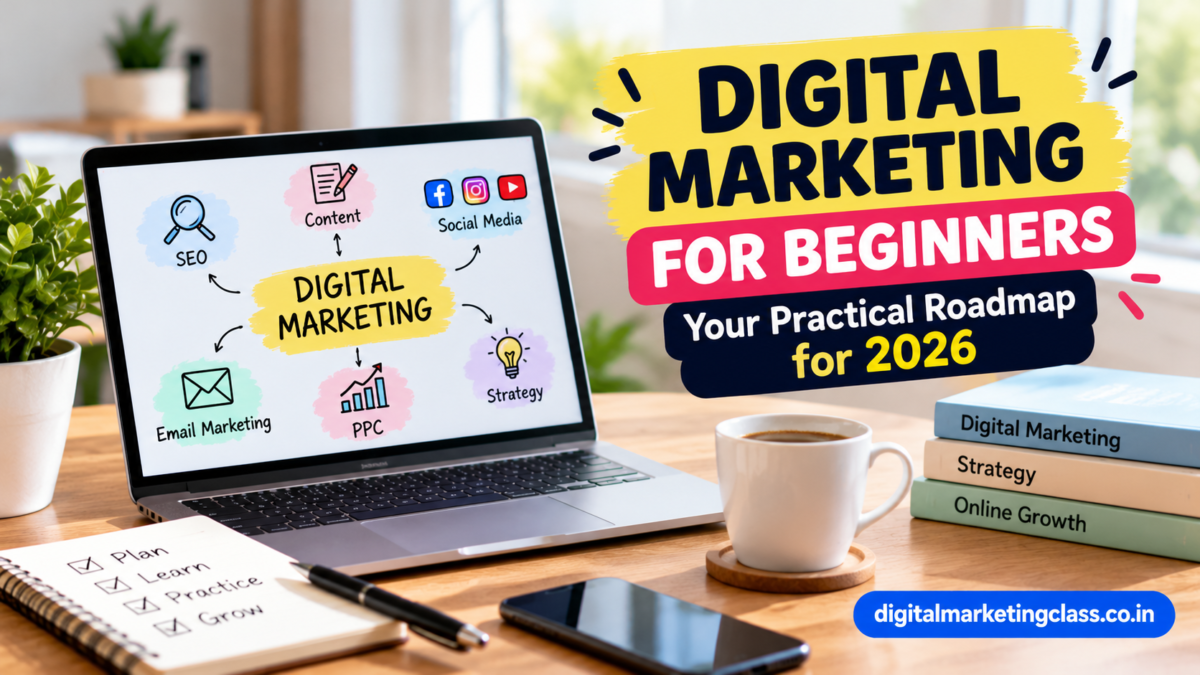
Introduction
Digital marketing helps businesses reach people through search engines, websites, social media, email, online advertising, and other digital channels. It is used by small businesses, large companies, freelancers, content creators, and organizations that want to connect with an audience online.
For beginners, the field can seem overwhelming. There are many tools, platforms, and strategies, and each promises to help businesses grow. The best way to learn is to understand the fundamentals first, practice with a small project, and gradually build your skills.
This guide explains the main areas of digital marketing, how they work together, and how you can start learning them in a practical way.
What Is Digital Marketing?
Digital marketing is the process of promoting products, services, or ideas through digital channels.
A local business might use a website and Google Business Profile to help customers find its services. An online store might combine search optimization, email marketing, and paid advertising. A freelancer might publish helpful content to demonstrate expertise and attract clients.
The right approach depends on the audience, business goals, budget, and resources available. There is no single strategy that works equally well for every organization.
Understand the Main Types of Digital Marketing
Search Engine Optimization (SEO)
SEO helps search engines discover, understand, and present relevant pages to people searching for information.
It includes creating useful content, improving website structure, making pages accessible to search engines, and addressing technical problems. SEO can support long-term discovery, but rankings and traffic are never guaranteed.
Beginners should start by understanding search intent, writing helpful content, learning basic on-page SEO, and using Google Search Console to monitor performance.
Content Marketing
Content marketing involves creating useful resources that attract and help a specific audience. Examples include blog articles, tutorials, videos, guides, case studies, and newsletters.
Good content starts with a real audience need. Before publishing, ask what problem the content solves, what evidence supports its claims, and what the reader should understand or do afterward.
Content marketing works best when quality and relevance guide the strategy instead of publishing volume alone.
Social Media Marketing
Social media marketing helps organizations communicate with audiences on platforms where those audiences spend time.
A business might share product demonstrations, customer questions, educational posts, short videos, or behind-the-scenes updates. The best format and posting frequency depend on the platform and the audience.
Rather than posting identical content everywhere, adapt the message to the platform and monitor meaningful outcomes such as relevant engagement, website visits, enquiries, or sales.
Email Marketing
Email marketing lets businesses communicate directly with people who have chosen to receive their messages.
It can be used for newsletters, product updates, educational content, onboarding, and customer follow-up. A useful email should have a clear purpose, relevant information, and an appropriate call to action.
Build your list with permission, explain what subscribers can expect, and provide a clear way to unsubscribe. Do not buy email lists or send unwanted bulk messages.
Pay-Per-Click Advertising (PPC)
PPC advertising allows businesses to pay for eligible clicks or other campaign outcomes, depending on the platform and campaign type.
Search ads can help reach people looking for particular products or services, while social advertising can support awareness, lead generation, and other goals.
Before spending money, define your target audience, campaign objective, budget, landing page, and measurement method. Start with a controlled test and review results before increasing investment.
Affiliate and Influencer Marketing
Affiliate marketing rewards partners for qualifying referrals or sales under an agreed arrangement. Influencer marketing involves working with creators who communicate with an audience.
Both can help businesses reach relevant communities, but success depends on audience fit, credibility, transparent disclosures, and clear measurement.
Do not select partners solely by follower count. Consider whether their audience matches your target customers and whether the partnership supports your brand’s reputation.
Build a Simple Digital Marketing Strategy
Digital marketing becomes easier to manage when you begin with a clear plan.
Step 1: Define Your Goal
Choose a measurable business objective. Examples include increasing qualified enquiries, growing an email subscriber list, generating online sales, or improving awareness among a particular audience.
Avoid vague goals such as “get more engagement” unless you define what meaningful engagement means for your business.
Step 2: Understand Your Audience
Identify who you want to reach, what problems they face, what information they need, and how they make decisions.
Use customer conversations, support questions, surveys, relevant search queries, and existing business data to understand their needs. Avoid relying only on assumptions.
Step 3: Select Suitable Channels
You do not need to use every digital marketing channel at once.
A new educational website might begin with useful articles and SEO. A local service business might focus on its website, local search visibility, and customer reviews. An online store might combine product content, email, and carefully measured advertising.
Choose channels based on your audience and available resources.
Step 4: Create Useful Content
Develop content that answers real questions and helps people make informed decisions.
For each piece, define the audience, topic, main message, supporting evidence, and desired next step. Use clear language and original examples where possible.
Review content before publishing, especially when it contains technical, financial, health, or legal information.
Step 5: Measure Results
Use analytics and platform reporting to understand whether your activity supports your goals.
Depending on the channel, useful measurements may include qualified traffic, conversion rate, cost per lead, email sign-ups, revenue, or return on advertising spend.
Avoid judging success by a single metric. More visits do not necessarily mean more customers, and a high click-through rate does not guarantee sales.
Essential Digital Marketing Tools for Beginners
You can begin with a small collection of tools rather than paying for multiple subscriptions immediately.
- Google Search Console: Helps monitor search visibility and investigate indexing issues.
- Google Analytics: Can help measure website activity when configured appropriately.
- Google Trends: Helps explore how interest in search topics changes over time.
- Google Keyword Planner: Supports keyword research and advertising planning.
- A spreadsheet: Useful for planning content, tracking campaigns, and organizing results.
- A design tool: Helps create consistent graphics and social media visuals.
- An email marketing platform: Useful when you are ready to manage permission-based subscriber communication.
Features, access, and pricing can change. Check each provider’s official documentation before relying on a particular capability.
A Beginner-Friendly 30-Day Learning Plan
You can build a foundation without trying to master everything at once.
Week 1: Learn the fundamentals
Understand SEO, content marketing, social media, email marketing, paid advertising, and basic analytics.
Week 2: Choose a small project
Create a simple website, plan a short content series, or develop a marketing plan for a business you understand. Define the audience and the objective before producing content.
Week 3: Publish and promote
Publish useful content, improve its presentation, and share it through appropriate channels. Follow platform rules and avoid spammy promotion.
Week 4: Review the results
Record what you published, how people interacted with it, what questions arose, and what you would improve. Use the findings to plan your next experiment.
The goal of the first month is to build practical experience, not to promise a specific traffic or revenue result.
Common Digital Marketing Mistakes Beginners Should Avoid
Trying every channel at once: Too many activities can spread your time and budget thinly. Start with a few channels that fit your audience.
Expecting instant SEO results: Organic search visibility can take time and depends on many factors.
Creating content only for keywords: Content must answer the reader’s question, not simply repeat search terms.
Ignoring measurement: Without a clear objective and useful data, it is difficult to understand what is working.
Spending on ads without a plan: Define your budget, audience, landing page, and success criteria before launching a campaign.
Copying competitors without understanding their strategy: Their audience, budget, resources, and business model may differ from yours.
Ignoring privacy and consent: Follow applicable data-protection rules, email requirements, and advertising-platform policies.
Conclusion
Digital marketing is easier to learn when you break it into manageable skills and apply them to a real project. Start with your audience and business objective, choose appropriate channels, publish helpful content, and measure meaningful results.
You do not need expensive tools or a complicated campaign to begin. A focused plan, consistent practice, and a willingness to learn from evidence can help you build a stronger foundation in digital marketing throughout 2026 and beyond.


